
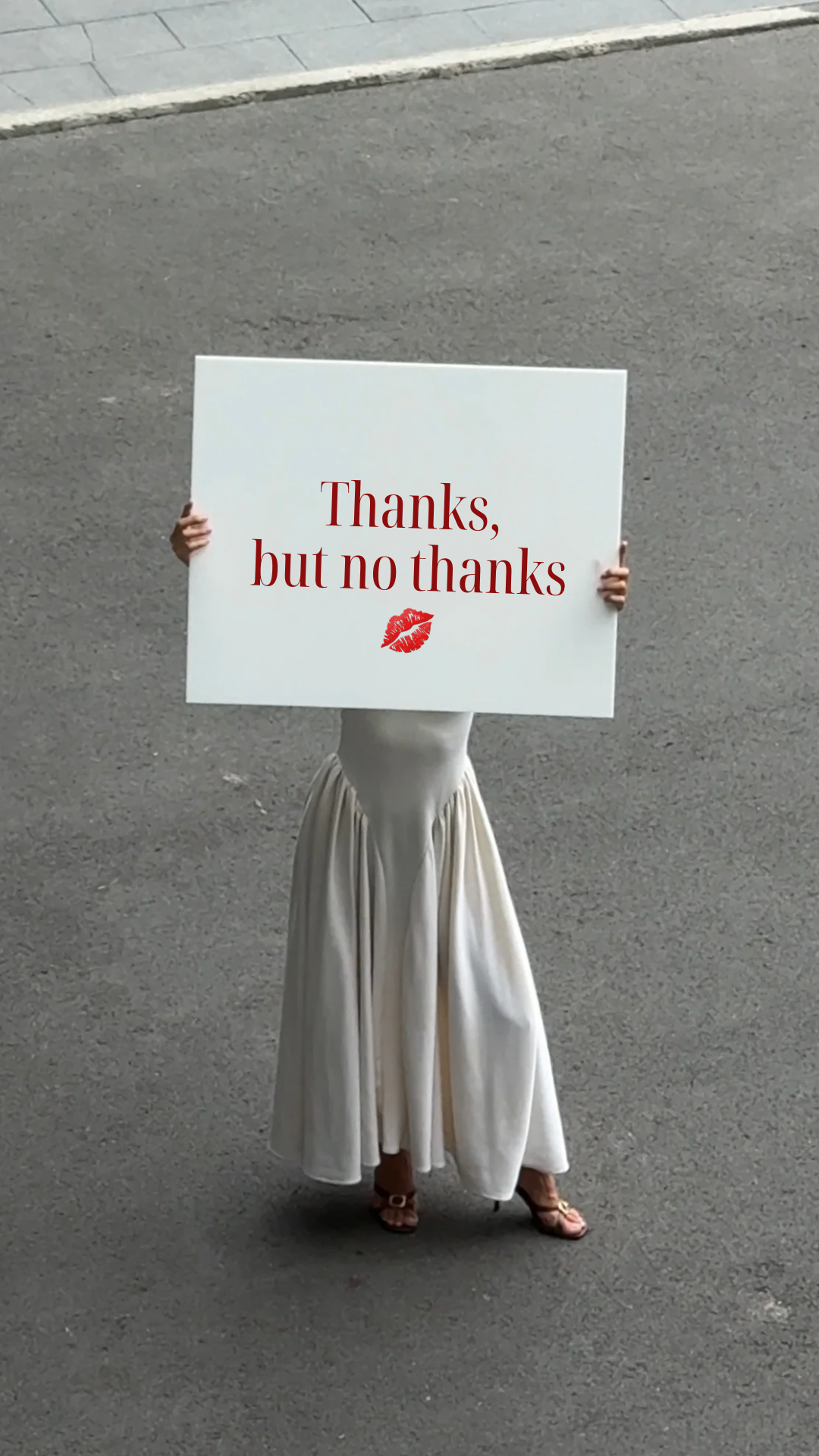

Reclaiming our space: how we learned to set boundaries and rebuild our lives
Most women didn’t grow up learning how to set boundaries. We were taught to be kind, helpful, agreeable.
Good girls basically. We learned how to read a room, anticipate needs, and keep the peace – even if it meant abandoning ourselves in the process.
But later in life – when exhaustion mounts, when resentment builds, when identity feels diluted…that’s the signal.
Boundaries become not a shield, but a sanctuary. They don’t shut people out, they call your ‘self’ back in.
Why Boundaries Are Vital
Without boundaries, life becomes a slow drip of your goodness, given away piece by piece. Boundaries preserve energy, guard sanity and preserve clarity. They allow relationships and work to breathe, instead of suffocating under expectations.
Recognize the Quiet Boundaries First
The most powerful boundaries aren’t always loud. They can be soft, subtle, internal. Some guard time. Others guard energy. Some protect emotional bandwidth.
The first step is naming them:
• Emotional boundaries: choosing which feelings to hold, and which to release
• Time boundaries: protecting days, hours, moments from becoming “someone else’s”
• Mental boundaries: discerning which thoughts, narratives and beliefs are yours
• Physical/material boundaries: deciding what enters your space, your body, your life
Once named, these boundaries return language to your internal map. Sensitivity becomes a signal, not a flaw.
Turning Inward Before You Communicate
You can’t draw lines you haven’t first seen. Before any conversation, look inward.
Ask yourself:
• Where was “yes” said when “no” felt truer?
• Where does tension or resentment live?
• What drains? What restores?
Reflection, journaling, stillness – they reveal what noise always hides.
Speaking with Clarity, Without Blame
Boundaries don’t need sharp edges to be strong. You can protect your mental space while holding connection.
Statements like:
“I need a moment to breathe.”
“I can’t take this on right now.”
“I hear you, but I can’t carry that.”
… protect your field without shutting down the relationship.
Expect Resistance – It’s Part of the Growth
Change unsettles the status quo. Some will push back, others will drift. And internal voices may nag. But that’s okay. If a connection depends on your self-neglect, it’s built on shaky ground. Real connection adjusts, not demands.
Practice Saying “No,” Gently but Firmly
“No” may feel heavy at first, but when practiced, becomes liberating. No to overextending. No to pleasing. No to proving worth through doing. Each “no” is a seed for meaningful “yeses” – space, energy, clarity.
Treat Self-Care as Sacred
Once boundaries find their footing, we must guard the space they create.
Walks without phones.
Mornings without noise.
Silence. Sleep. Nourishing rituals.
Self-care transitions from option to lifeline.
Boundaries Evolve With You
You grow. Your relationships evolve. What served six months ago may feel limiting today.
Regular check-ins keep boundaries alive:
• Does this boundary still heal or does it feel tight?
• Do I feel resentment or ease when I uphold it?
• Is this emerging from love, or from fear?
Boundaries aren’t final. They’re fluid maps for new terrain.
The Quiet Transformation
Boundaries don’t erase all struggle, but they shift the ground. Time returns. Identity reawakens. Clarity deepens. In the community of boundary-led lives, each person choosing themselves sparks transformation for many.
When choosing self becomes a practice – not a betrayal – that’s when life begins to change.
And now we’d love to hear from you: Have you started setting boundaries? What’s been your biggest shift or challenge? Drop it in the comments and let’s hold space for each other here. You’re not alone in this. We’re walking it with you.
LHW x
The content shared in this article is for informational and educational purposes only and should not be considered a substitute for professional advice, including medical, psychological, or health-related consultation.
Leading Her Way LLC (“LHW”) does not provide medical or professional services and does not endorse or recommend any opinions, treatments, products, or practices mentioned. All views expressed are those of the writer or interviewee.
By engaging with this content, you acknowledge that LHW shall not be held responsible for any loss, claim, or consequence arising from the use of, or reliance on, the information provided.


